Quick answer
The overthinking drawings that hit hardest show the loop, not a sad face: a long scribble coming out of one short message, a head with too many tabs open, a spotlight that only you can see. Below are seven original drawings, what each one means, and how to draw it yourself in a few lines.
Every drawing on this page is in the doodle style of my book, where almost every page has a sketch. They're free to share with credit, and each one comes with the idea behind it, so it means something to the person you send it to.
You don't need to draw well to use them. In one study by Jennifer Drake and Ellen Winner, people who drew something to take their mind off a sad memory felt better than people who drew the memory itself. Another, led by Girija Kaimal, found that 45 minutes of making art lowered the stress hormone cortisol in most participants, whatever their skill.
1. The 3 AM loop
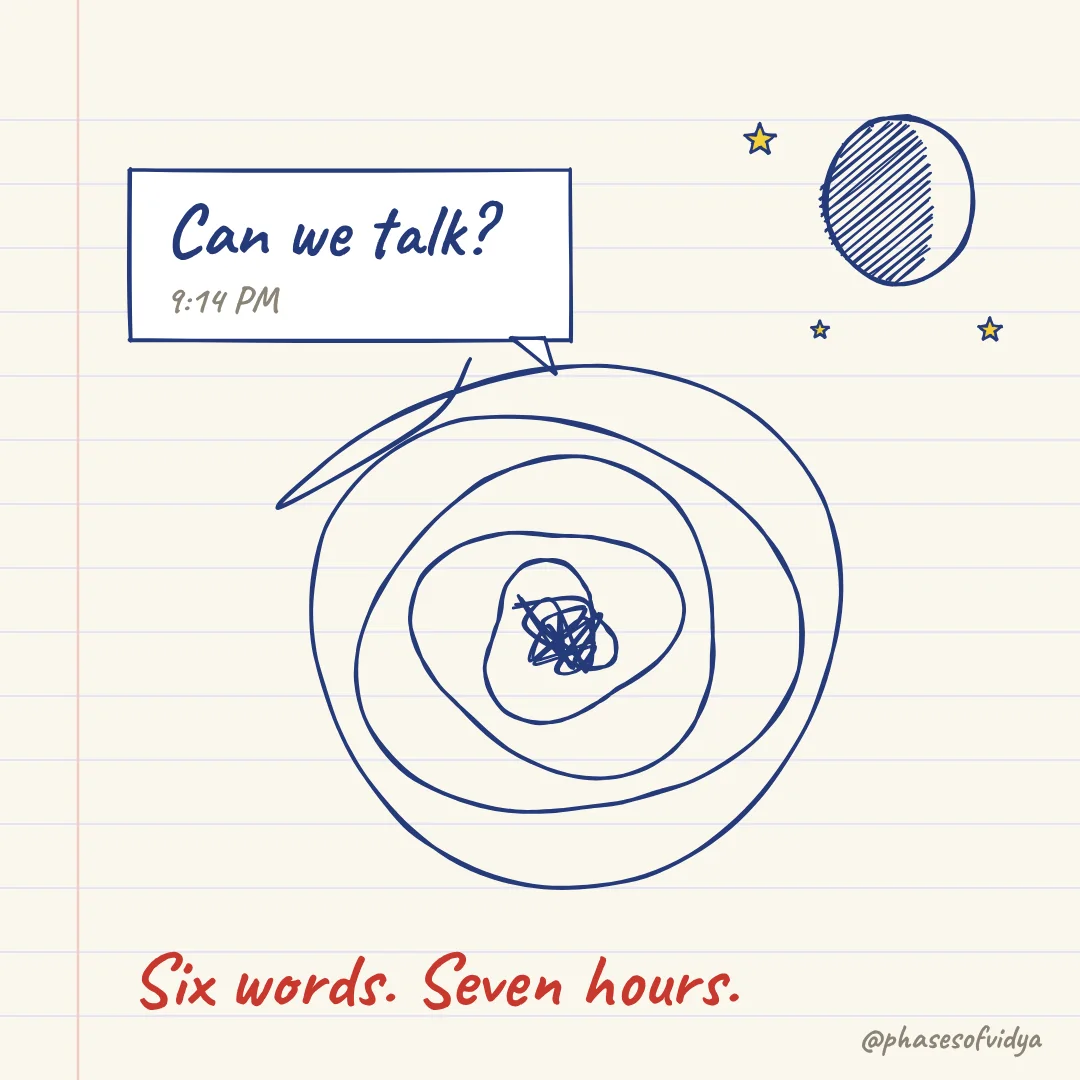
What it means: one short message (“Can we talk?”) and a whole night of thinking that goes round and round without arriving anywhere. Psychologists call it rumination. The knot at the end is the point: the line gets longer, but never goes further.
Draw it: a rounded rectangle for the message, a line that loops in bigger and bigger circles from its corner, a tight scribble where it ends, and a crescent moon in the corner.
2. Too many tabs open
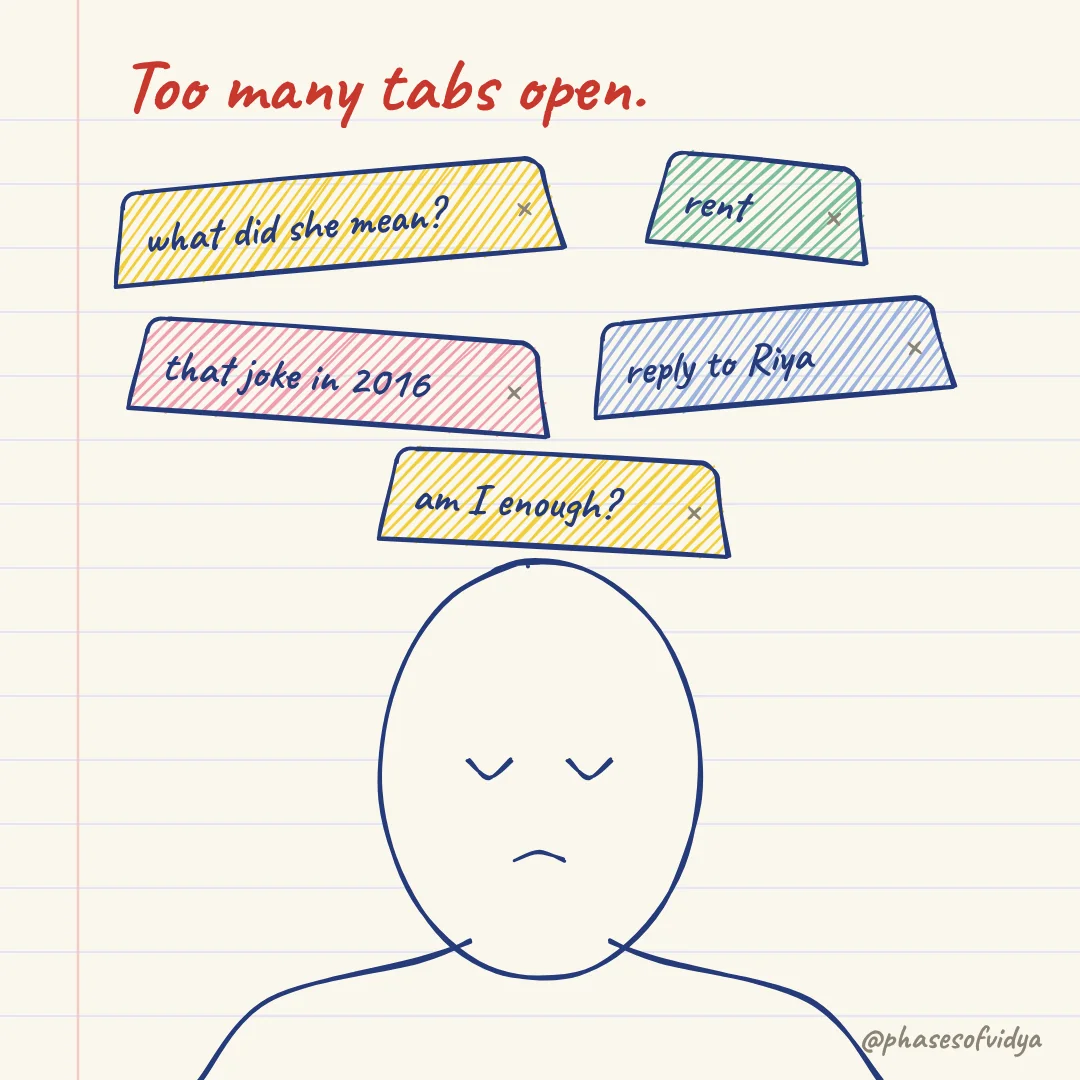
What it means: psychologist Bluma Zeigarnik noticed that we remember unfinished tasks better than finished ones. Each worry stays open like a tab. The good news from later research: you don't have to finish a task to close its tab. Writing a plan for it is enough.
Draw it: an oval head with closed eyes, then five tab shapes (flat-topped rectangles with rounded corners) fanned out above it, each with a tiny “x” and a worry written inside.
3. Worst, best, most likely
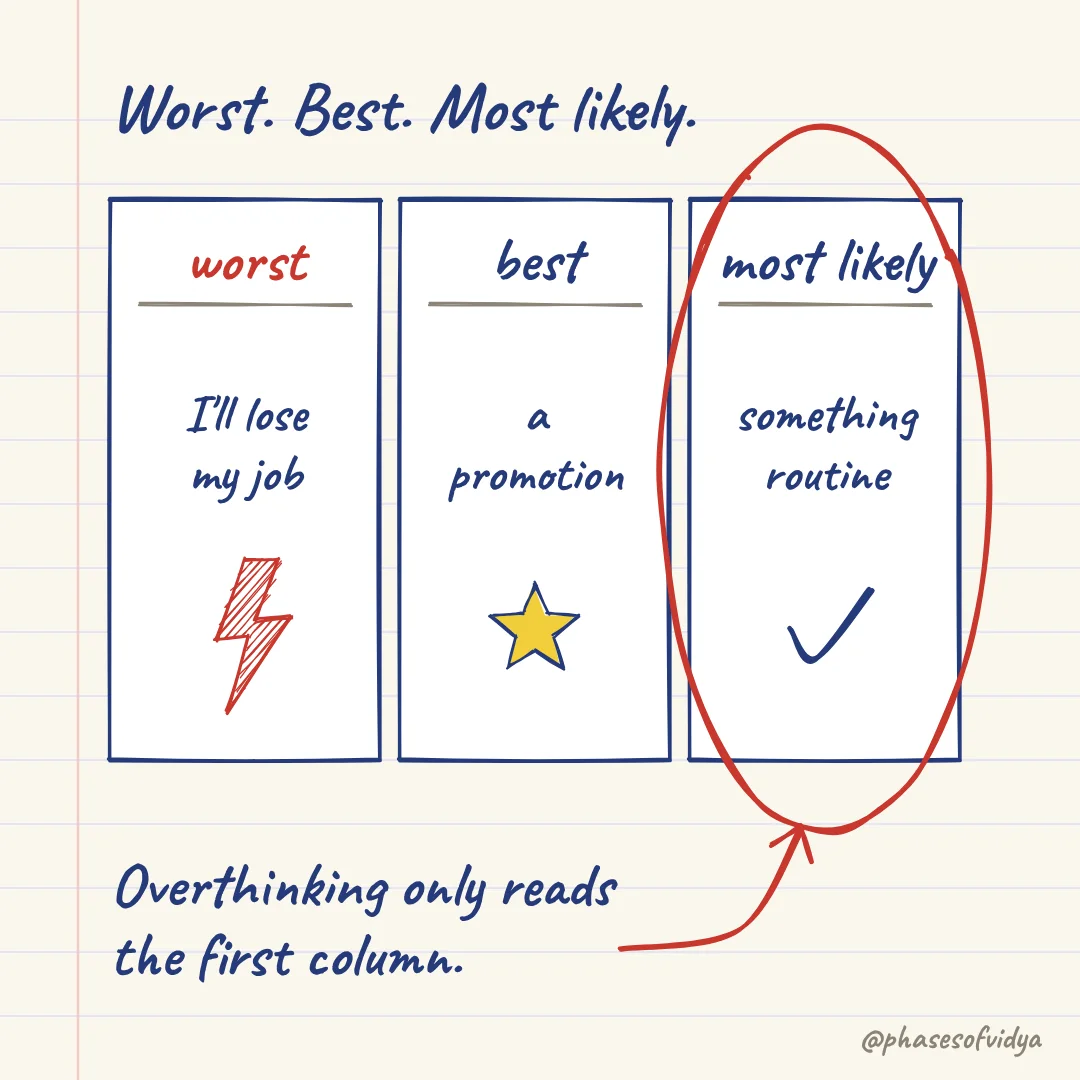
What it means: an overthinking mind jumps straight to the worst case and stops there. Making it fill in the best case and the most likely case shows what the loop keeps skipping: the most likely outcome is usually ordinary.
Draw it: three tall boxes side by side, a heading on each, one line inside each, and a loose red circle around the third.
4. Everyone's in their own spotlight
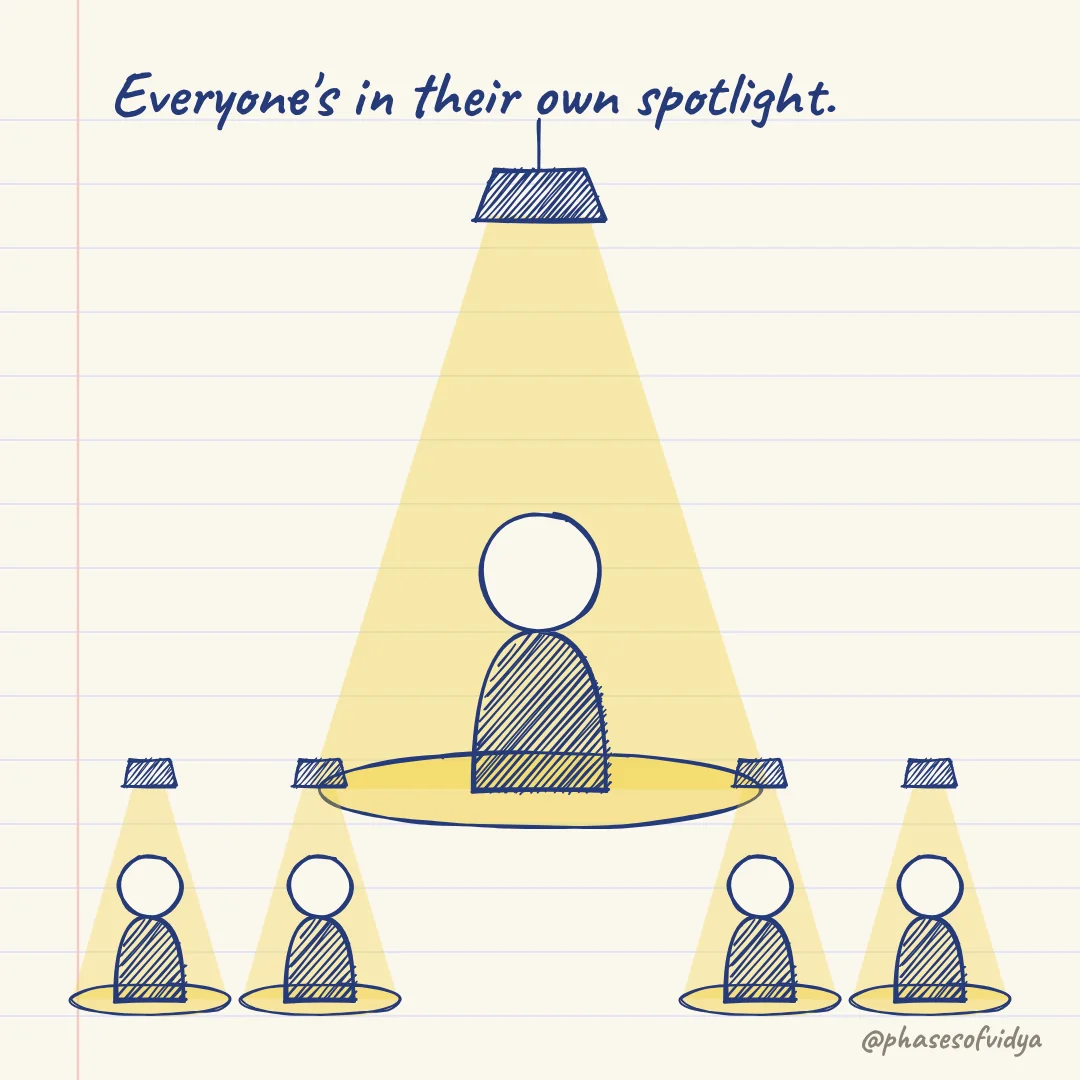
What it means: the spotlight effect. In a study led by Thomas Gilovich, students wearing an embarrassing t-shirt guessed that about half the room noticed; only about a quarter did. Everyone is too busy with their own spotlight to keep track of yours. More on this in the psychology of “log kya kahenge”.
Draw it: a cone of light from the top of the page onto one figure (a circle and a rounded body), then smaller cones over three or four figures around it.
5. Still a whole moon
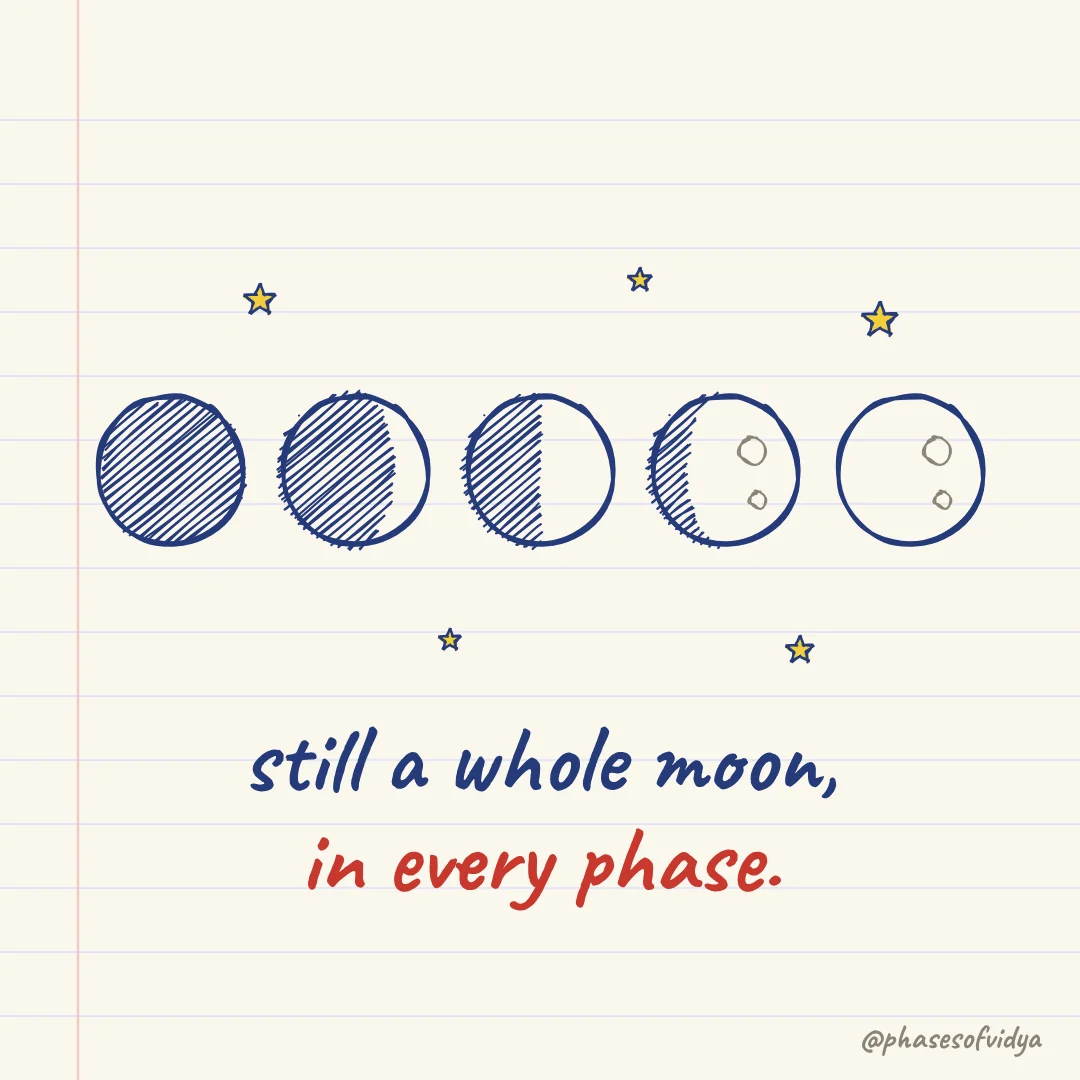
What it means: the idea at the heart of my book. The moon doesn't become less of a moon when you can only see a sliver of it. Your worth doesn't shrink in your hard phases either: the breakup phase, the no-job phase, the phase where getting out of bed was the whole day.
Draw it: five circles in a row. Shade the first fully, then shade a little less of each one, until the last is left empty and bright.
6. One thread at a time
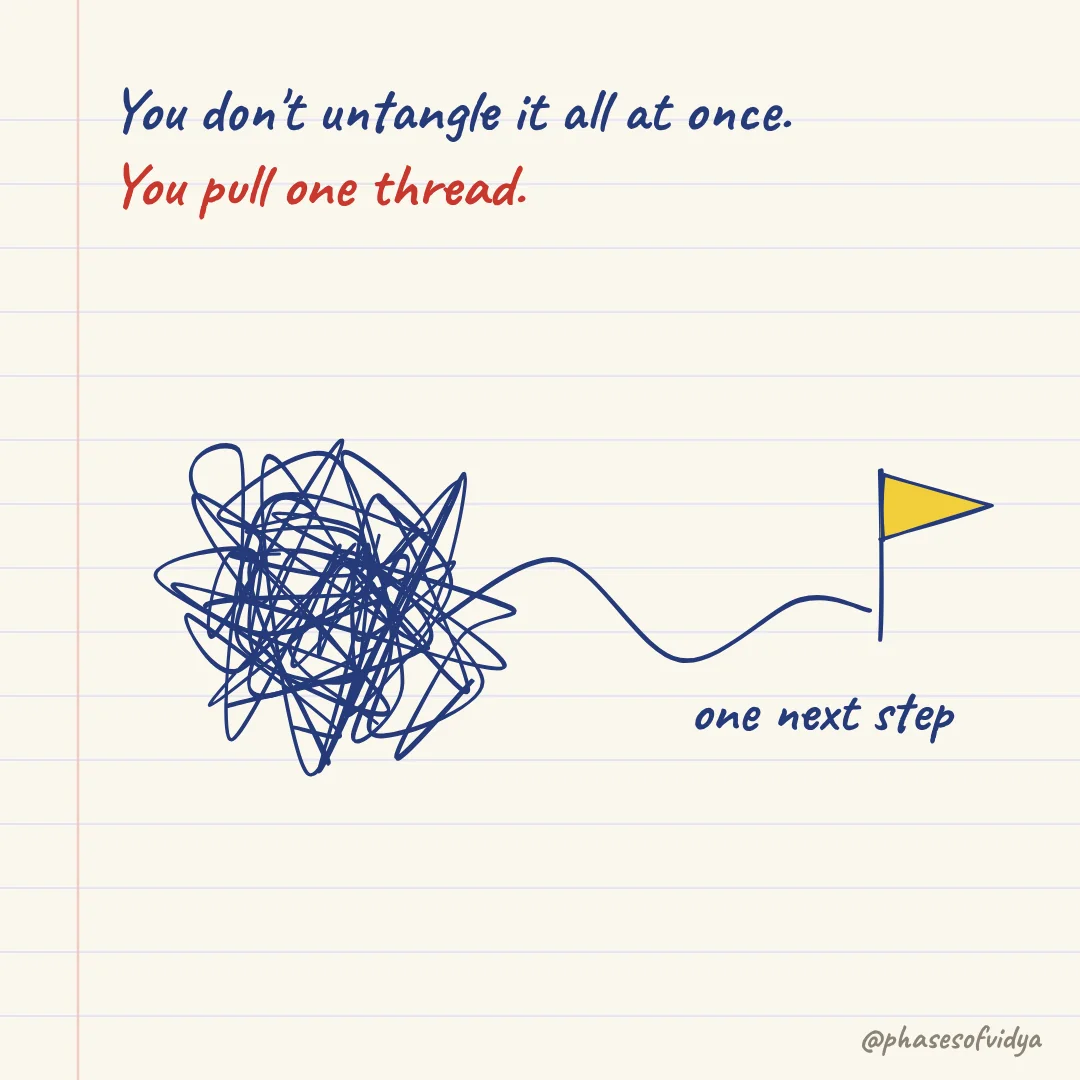
What it means: overthinking tries to solve everything at once, which is why it feels like a knot. The way out is one small next step for the one thing you can act on in the next 24 hours. Everything else can wait for tomorrow's worry time.
Draw it: a fast, messy scribble ball, then one smooth line leaving it and running straight across the page to a little flag.
7. Typed, deleted, typed
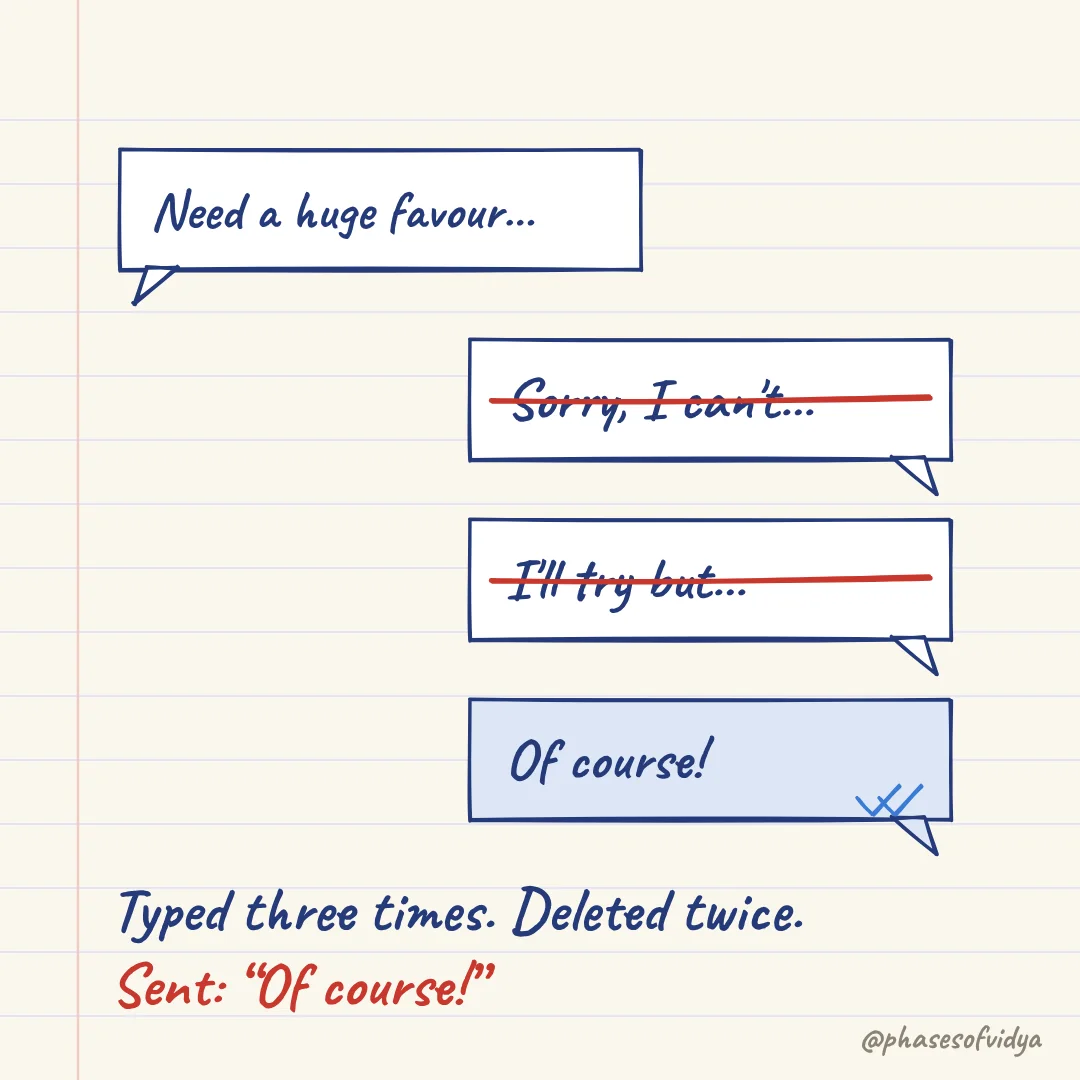
What it means: the habit of yes. The honest answer gets typed first, and deleted, because a “no” feels dangerous. If this one feels familiar, take the 12-question people pleaser test.
Draw it: three speech bubbles stacked down the page. Cross out the first two with a single line each, and add two small ticks under the last.
Draw your own overthinking
Drawing your own loop takes it out of your head and puts it somewhere you can look at it. Try this tonight:
Draw the trigger
A small box with the message, the meeting or the moment that started the loop.
Draw the loop
Write each thought on a line that curls round, until you're back where you started.
Draw the exit
One straight line out of the loop, ending in one small next step. If there isn't one tonight, write “6 PM tomorrow” and close the notebook.
Want more words to go with the drawings? Try these overthinking quotes for 3 AM.
Sharing these drawings
All seven drawings are original and made for Phases of Vidya. You're welcome to share them on Instagram, WhatsApp or Pinterest, or use them in a presentation, with credit to @phasesofvidya. Please don't sell them, print them on products, or remove the credit. For anything else, ask me.
Frequently asked questions
What is a good overthinking drawing idea?
Draw the loop instead of a sad face: a short message with a long spiral coming out of it, a head with too many tabs open, or a spotlight only you can see. Each shows what overthinking actually does.
How do I draw overthinking easily?
Start with the tangled thread: a quick scribble ball and one straight line leading out of it to a small flag. It takes under a minute and needs no drawing skill.
What does an overthinking drawing with deep meaning show?
The best ones show an idea, not only a feeling: that the mind keeps unfinished things open, that the worst case isn't the likely one, or that you are still whole in a hard phase.
Can I use these drawings on Instagram?
Yes, with credit to @phasesofvidya. Please don't sell them or remove the credit.
Does drawing help with overthinking?
It can. Research has found that drawing to take your mind off something improves mood, and that making art lowers stress hormones for most people, regardless of skill.
References
- Drake, J. E., & Winner, E. (2012). Confronting sadness through art-making: Distraction is more beneficial than venting. Psychology of Aesthetics, Creativity, and the Arts, 6(3), 251–266.
- Kaimal, G., Ray, K., & Muniz, J. (2016). Reduction of cortisol levels and participants' responses following art making. Art Therapy, 33(2), 74–80.
- Zeigarnik, B. (1927). Über das Behalten von erledigten und unerledigten Handlungen. Psychologische Forschung, 9, 1–85.
- Gilovich, T., Medvec, V. H., & Savitsky, K. (2000). The spotlight effect in social judgment. Journal of Personality and Social Psychology, 78(2), 211–222.